
Materials Buying Guide
Stainless Steel Litter Box vs Plastic: Compare Fit, Finish and Cleaning
Separate material claims from useful specifications: interior dimensions, smooth edges, entry height and a cleaning routine you can maintain.
By Pussies & Tits · 5 min read · Published
Sourcing and editorial standardsThe short answer
Choose a litter box by usable size, entry height, smooth construction and your cat’s acceptance before choosing steel or plastic. Stainless steel is not automatically odor-free or medically superior. Both materials need daily scooping and regular cleaning; a well-fitting plastic tray can be a sensible choice.
See your next step →Key takeaways
- Material alone does not establish comfort or hygiene.
- Check the whole tray, including plastic rims on steel models.
- Do not pay for unsupported antibacterial or odor-elimination promises.
Start with the specifications that affect use
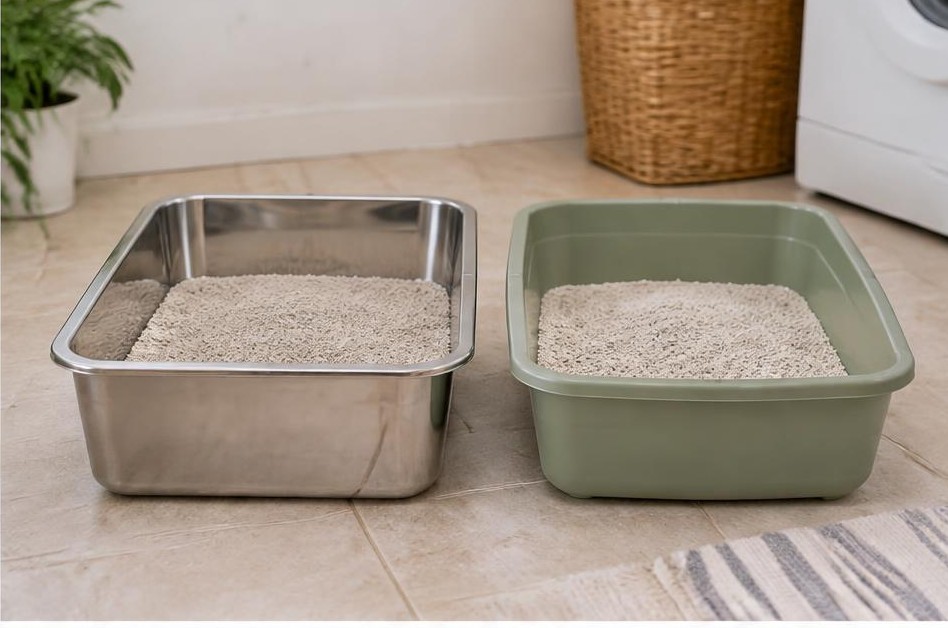
AAHA/AAFP emphasizes tray size, access, substrate preference and cleaning rather than prescribing one tray material. A steel pan that is cramped or difficult to enter is not an upgrade simply because it costs more. Compare internal length and width, the entrance and the shape of the walls. Decorative rims may reduce the effective space. Keep the accepted litter and location when testing a replacement so the cat is not facing several changes together.
Evaluate material claims cautiously
Steel and plastic describe construction, not verified performance. We have not run comparative odor, corrosion or bacterial tests on Amazon products. Claims such as 'never smells' should not replace maintenance or documented evidence. Ask what the entire product is made of: some steel designs have plastic lids, rims or fasteners that still need attention. Read cleaning instructions for the exact model rather than assuming all metal tolerates the same chemical treatment.
| Buying check | Steel tray | Plastic tray |
|---|---|---|
| Interior and entrance | Measure usable space | Measure usable space |
| Finish | Inspect seams and exposed edges | Inspect molded edges and damage |
| Handling | Check empty weight and grip | Check rigidity and grip |
| Maintenance | Follow model instructions | Follow model instructions |
Compare measured trays rather than slogans
Check interior space, entry height and cleaning instructions for both materials before buying.
Compare on Amazon →Affiliate link: we may earn from qualifying purchases at no extra cost to you.
Inspect the tray before your cat uses it
Look for a smooth entrance, secure removable pieces and a base that sits steadily. Run a cloth along accessible edges to check for snagging rather than testing with a cat’s paws. If parts are bent, sharp, cracked or loose, keep the tray out of use and contact the seller. If it slides on your floor, use suitable non-slip support that does not obstruct entry. Assembly photographs are not a substitute for inspecting the delivered item.
Make cleaning practical for your household
Daily scooping and regular washing remain essential regardless of material. AAHA/AAFP cautions against strong chemicals in routine litter management. Follow appropriate tray and litter instructions, rinse thoroughly and dry before refilling. Never mix cleaning products. Think about whether you can comfortably lift the tray when emptying it and whether it fits your cleaning area. A difficult-to-handle premium tray may be less useful than a simpler one you maintain consistently.
When to replace instead of upgrade
Damage, cleaning difficulty or unsuitable dimensions are concrete reasons to change a tray. A product trend is not. Keep your cat’s established option while introducing a replacement where possible, and observe voluntary use. New accidents require veterinary consideration; changing material alone cannot diagnose urinary or mobility problems. Compare total price only after confirming fit and finish. No particular brand or material receives an invented safety score in this guide.
Frequently asked questions
Are stainless steel litter boxes odor-free?
No material removes the need to scoop and wash. We have not verified odor-free claims for individual products.
Should I replace a plastic tray that my cat uses happily?
Not just because another material is fashionable. Replace it if condition, access, size or maintenance makes a change worthwhile.
Sources and further reading
This guide summarizes the references below. It is not a veterinary consultation or an independently tested product review. Check current local wildlife advice before acting.
Compare measured trays rather than slogans
Check interior space, entry height and cleaning instructions for both materials before buying.
Compare on Amazon →Affiliate link: we may earn from qualifying purchases at no extra cost to you.
Keep exploring
Litter Box Comparison
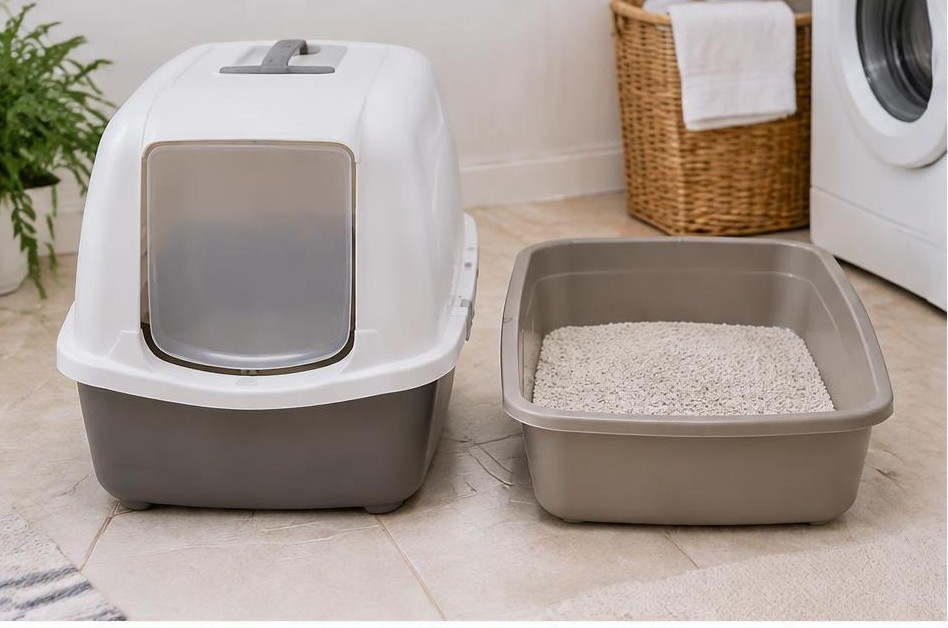
Covered vs Uncovered Litter Box: Test Your Cat’s Preference Before Buying
Compare usable space, exits and daily inspection without assuming that a hood gives every cat the privacy they want.
5 min read
Senior Cat Comfort
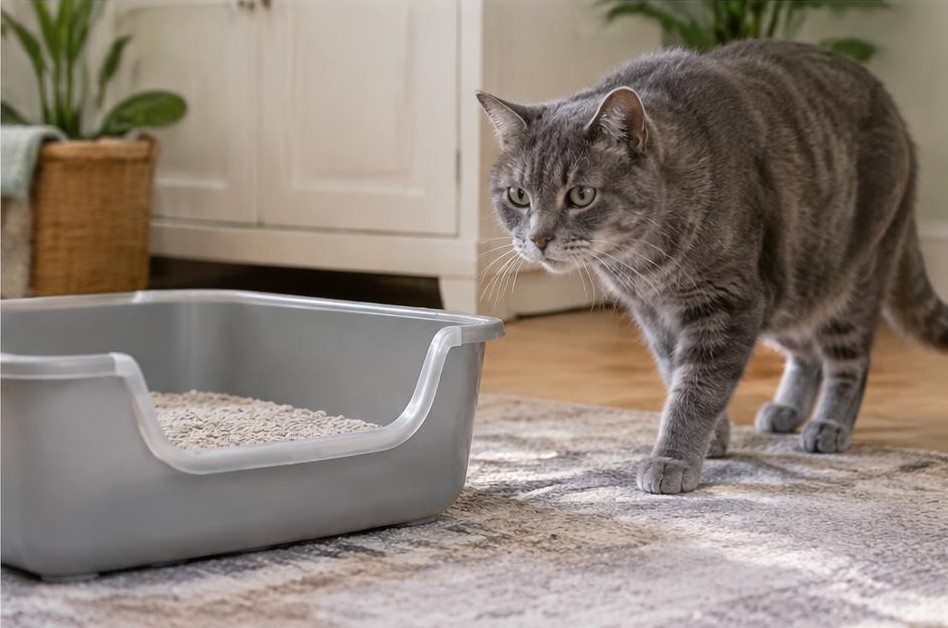
Low-Entry Litter Box for Senior Cats: Choose Easier Access Without Losing Space
Check step-in height, room to turn, stable footing and nearby placement while taking new mobility changes seriously.
5 min read