
Senior Cat Comfort
Low-Entry Litter Box for Senior Cats: Choose Easier Access Without Losing Space
Check step-in height, room to turn, stable footing and nearby placement while taking new mobility changes seriously.
By Pussies & Tits · 5 min read · Published
Sourcing and editorial standardsThe short answer
Look for a low, smooth entrance, enough room to turn and a stable non-slip approach. Place the tray where your senior cat can reach it without unnecessary stairs. There is no universal entry height that suits every older cat; new difficulty climbing or toileting should prompt a veterinary assessment.
See your next step →Key takeaways
- A low entrance should not mean a cramped tray.
- Location and footing matter alongside the product dimensions.
- Pain or new house-soiling is a health concern, not simply an equipment issue.
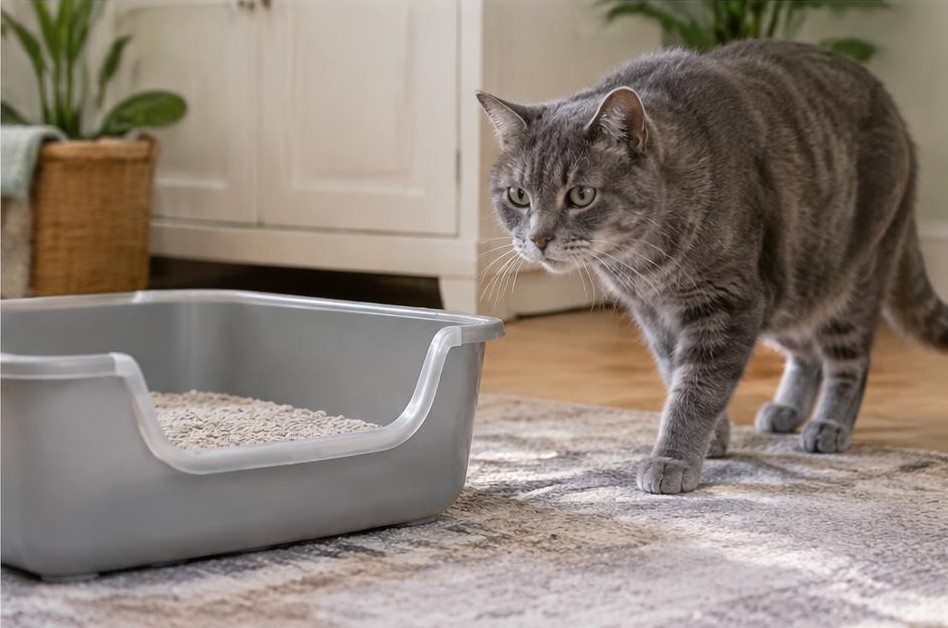
Notice the change before choosing equipment
Cornell’s guidance on older cats emphasizes easy access to food, water and litter boxes and warns against dismissing health or behavior changes as old age. Observe whether your cat hesitates at the rim, takes a different route or has stopped using a formerly accepted box. Record when the change began and tell your veterinarian. A more accessible tray can support comfort while a professional assesses the cause; it should not delay care or be presented as treatment for arthritis.
Measure the entrance, not the tallest side
The relevant step is the height your cat must cross at the opening. A product can have a low front and higher sides, so total wall height may be misleading. Check internal dimensions and room for normal turning. AAHA/AAFP advises edges that are not too high for kittens or senior cats but does not prescribe one perfect measurement for all animals. Reject listings that omit the entry specification rather than estimating it from a photograph.
| Feature | What to check | Why it matters |
|---|---|---|
| Front opening | Documented step-in height | Reduces unnecessary climbing |
| Interior | Comfortable turning space | Low does not mean cramped |
| Floor contact | Stable base and footing | Avoids sliding during entry |
| Surrounding area | Clear, accessible route | A good tray can still be hard to reach |
Compare accessible trays by actual measurements
Look for a smooth low opening, roomy interior and stable base. Confirm the entry height before ordering.
Compare on Amazon →Affiliate link: we may earn from qualifying purchases at no extra cost to you.
Make the journey easier too
A low entrance downstairs does little for a cat resting upstairs who avoids steps. Add an accessible toileting option near routinely used areas, away from food and water. Keep surrounding objects and floor coverings from becoming obstacles. A mat should stay flat and not catch paws. In homes with several cats, make sure another animal cannot block the only easy approach. Retain other familiar trays when possible rather than moving every resource at once.
Introduce the replacement gently
Use familiar litter in the new tray and keep the accepted option during introduction if practical. Allow voluntary exploration without lifting the cat in to demonstrate it. Scoop daily and wash regularly so cleanliness remains consistent. Note whether entry looks easier, not only whether waste appears in the tray. Avoid improvised cut openings that leave rough edges or unstable walls; a purpose-built smooth entrance may be simpler to inspect and maintain.
Know the limits of a buying guide
A tray cannot diagnose pain, weakness, urinary disease or cognitive changes. Repeated straining, very little urine or distress warrants urgent veterinary advice. For a stable cat whose health has been assessed, compare entrance, interior space and maintenance rather than a 'senior' label. We have not tested individual models or established weight-bearing safety ratings. Keep the wider home comfortable, with accessible resting, drinking and feeding areas as well as toileting choices.
Frequently asked questions
What is the ideal entry height for a senior cat?
There is no single height for every cat. Choose documented dimensions based on observed access and veterinary advice about mobility.
Does a low-entry box treat arthritis?
No. It can make access easier but does not diagnose or treat pain. Discuss mobility changes with a veterinarian.
Sources and further reading
This guide summarizes the references below. It is not a veterinary consultation or an independently tested product review. Check current local wildlife advice before acting.
Compare accessible trays by actual measurements
Look for a smooth low opening, roomy interior and stable base. Confirm the entry height before ordering.
Compare on Amazon →Affiliate link: we may earn from qualifying purchases at no extra cost to you.
Keep exploring
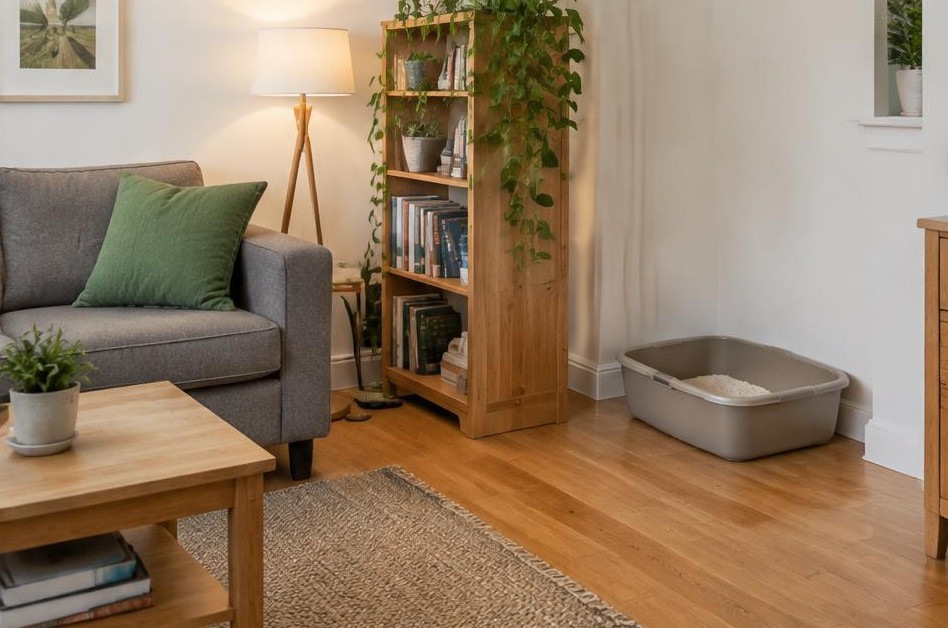
Small-Space Cat Care
Where to Put a Litter Box in a Small Apartment: An Access-First Checklist
Compare bathroom, bedroom and living-area corners by quiet access, cleaning room and escape routes—not how well a cabinet hides the tray.
5 min read
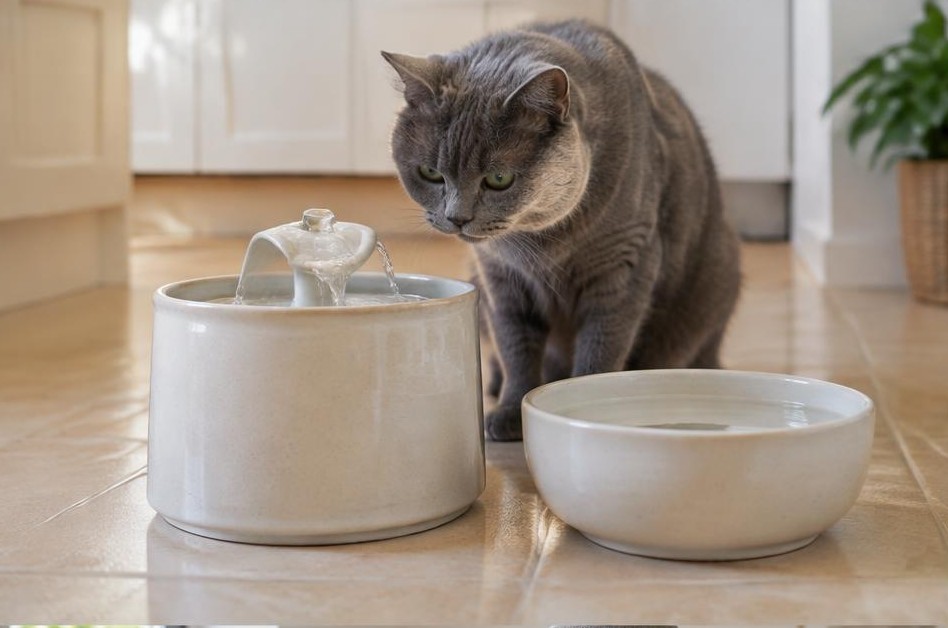
Hydration Choices
Cat Water Fountain vs Bowl: What to Try Before You Buy
Compare cleaning, noise, placement and drinking preferences, with a bowl-first trial and clear advice on when to call a vet.
6 min read