
Small-Space Cat Care
Where to Put a Litter Box in a Small Apartment: An Access-First Checklist
Compare bathroom, bedroom and living-area corners by quiet access, cleaning room and escape routes—not how well a cabinet hides the tray.
By Pussies & Tits · 5 min read · Published
Sourcing and editorial standardsThe short answer
Choose a quiet, easy-to-reach spot that remains accessible with doors closed and gives your cat room to approach, turn and leave. Keep the litter area separate from food and water. A bathroom can work if access is reliable; a hidden cabinet is not automatically a better choice.
See your next step →Key takeaways
- Reliable access is more important than keeping the tray out of sight.
- Check the room when doors are closed, visitors arrive and appliances run.
- Measure the tray itself, not only the furniture around it.
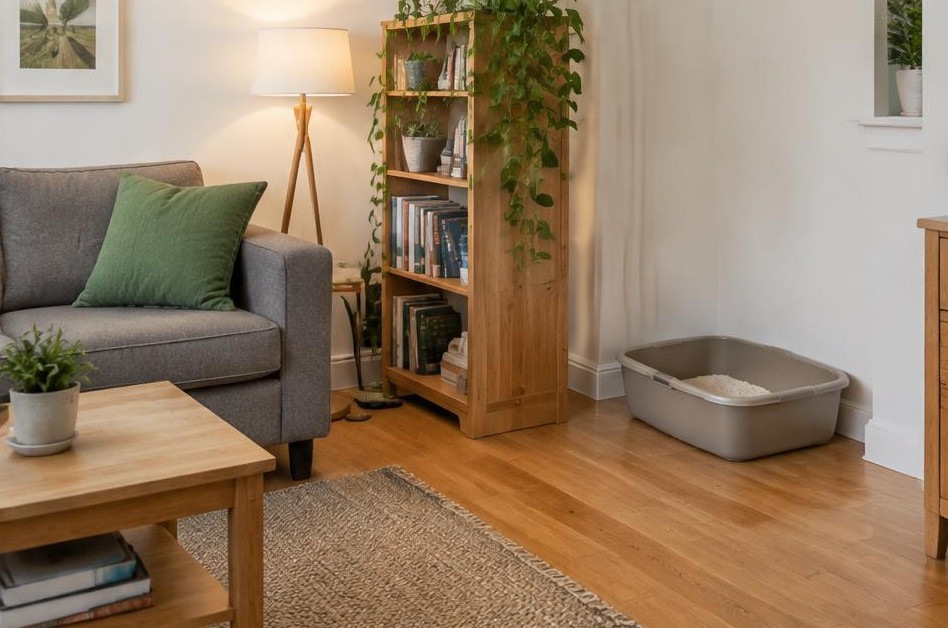
Look at the apartment from your cat’s height
A convenient human storage space may be an uncomfortable toileting area. AAHA/AAFP recommends multiple quiet locations with easy access and an escape route. Walk through the route your cat would take: a narrow passage, another pet or a closing door can change whether a corner works. In a studio, physical separation from food and water still matters even when separate rooms are unavailable. Do not shrink the box simply to make it disappear beneath furniture.
Compare the realistic places you have
No room is universally correct. A bathroom may be quiet except during laundry; a bedroom may become inaccessible at night; a living-area corner may be calmer than either. Test the actual household routine instead of copying a staged product photograph.
| Candidate | What could work | What to check |
|---|---|---|
| Bathroom | Washable surroundings | Door access and appliance noise |
| Bedroom corner | Low traffic | Nighttime access and ventilation |
| Living-area edge | Always available | Guests, pets and cleaning room |
| Furniture enclosure | Visually discreet | Internal room, exit route and maintenance |
Fit the tray to the cat and the room
Compare measured open trays and washable floor protection before committing to an enclosure.
Compare on Amazon →Affiliate link: we may earn from qualifying purchases at no extra cost to you.
Use a tape measure before choosing furniture
Record the tray’s usable inside space and its outside dimensions, including any high sides. Then allow space for the cat to enter and leave without squeezing through stored objects. Check that you can lift or slide the tray out without tipping dirty litter across the room. A cabinet label such as 'large' does not tell you whether a suitably sized tray fits. Ask for clear measurements or avoid the listing if essential details are missing.
Try a location without removing the familiar option
If possible, add a tray at the proposed spot while retaining the established one. Keep the litter type familiar so you are testing location, not several variables at once. Note voluntary use, hesitation and any blocking by another pet. Do not carry the cat over repeatedly or punish them for choosing differently. A mat can help contain tracking but should not make the doorway slippery or difficult to cross. Clean daily so location is not confounded by odor or debris.
Know when layout changes are not enough
New house-soiling can have medical, behavioral or environmental causes. AAHA recommends veterinary assessment to rule out medical problems before treating it as a training failure. If your cat repeatedly strains, produces little or no urine or seems distressed, seek urgent veterinary advice; do not wait for furniture to arrive. Once health has been considered, make the smallest useful change to access. An open tray and a washable floor protector can be more practical than a cramped enclosure.
Frequently asked questions
Is the bathroom the best place for every litter box?
No. It works only if your cat can reach it reliably and the room is not frightening or noisy during use.
Can I put a litter box inside furniture?
Possibly, but check usable tray space, approach and escape routes, ventilation and cleaning access. Keep a familiar open option while assessing preference.
Sources and further reading
This guide summarizes the references below. It is not a veterinary consultation or an independently tested product review. Check current local wildlife advice before acting.
Fit the tray to the cat and the room
Compare measured open trays and washable floor protection before committing to an enclosure.
Compare on Amazon →Affiliate link: we may earn from qualifying purchases at no extra cost to you.
Keep exploring
Multi-Cat Homes
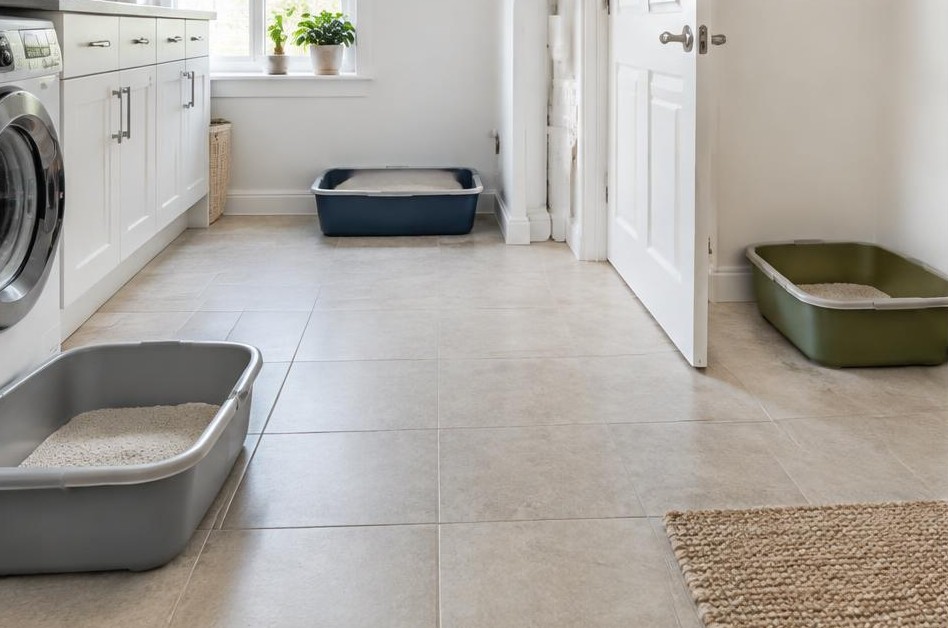
How Many Litter Boxes for 2 Cats? Start With Three Separate Locations
Use the cats-plus-one starting point, then check access, social tension and cleaning before buying a larger shared tray.
5 min read
Senior Cat Comfort
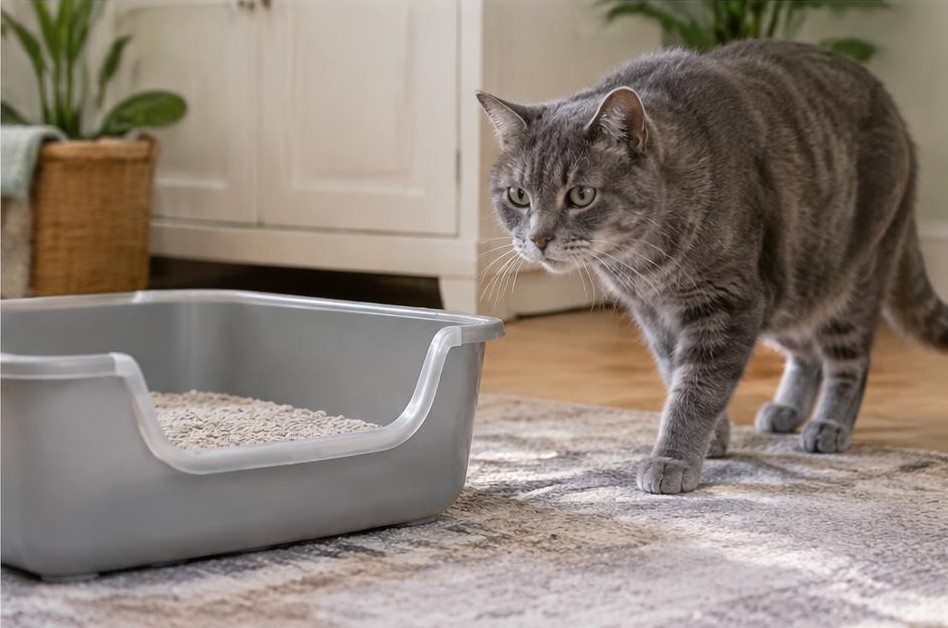
Low-Entry Litter Box for Senior Cats: Choose Easier Access Without Losing Space
Check step-in height, room to turn, stable footing and nearby placement while taking new mobility changes seriously.
5 min read