
Multi-Cat Homes
How Many Litter Boxes for 2 Cats? Start With Three Separate Locations
Use the cats-plus-one starting point, then check access, social tension and cleaning before buying a larger shared tray.
By Pussies & Tits · 5 min read · Published
Sourcing and editorial standardsThe short answer
For two cats, start with three litter boxes. AAHA/AAFP recommends one per cat plus one extra as a general rule of thumb. Spread them across accessible, quiet locations: three trays side by side do not provide the same choices as three separate toileting areas.
See your next step →Key takeaways
- Start with three boxes for two cats, then adapt to their social groups and access needs.
- Separate locations help prevent one cat blocking all access.
- A self-cleaning machine does not automatically replace separate toileting choices.
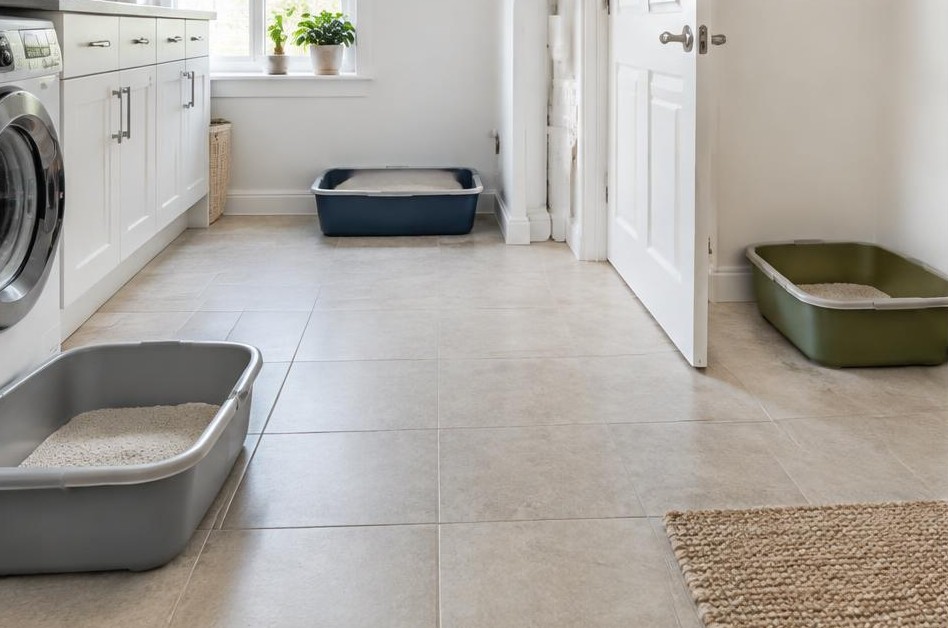
Why the extra box matters
Two cats may share a sofa peacefully but still need space around essential resources. The AAHA/AAFP guidance treats box number as a starting point alongside quiet locations, convenient access and an escape route. An extra tray gives another option when one is occupied, dirty or difficult to approach. It is not a promise that a household will never have accidents. Watch what both cats actually use rather than relying only on a numerical rule.
Distribute access, not just plastic trays
Draw a simple map of resting areas, doorways and stairs. Put boxes in distinct accessible areas rather than lining all three along one wall. A cat guarding a doorway can make every box beyond it unavailable. In a multi-level home, a box on an appropriate floor can reduce travel, especially for a cat with reduced mobility. Keep access available overnight and when you leave home.
| Layout | Potential problem | Better starting point |
|---|---|---|
| Three boxes in one closet | One doorway controls every option | Separate quiet areas |
| Only downstairs | Stairs may discourage an older cat | Accessible options on used floors |
| Beside a noisy appliance | Sudden noise can interrupt use | A predictable low-traffic setting |
Add a separate toileting choice
Compare large open trays by internal size and entry height; a simple extra box may be enough.
Compare on Amazon →Affiliate link: we may earn from qualifying purchases at no extra cost to you.
Make each box a usable choice
Enough boxes will not help if they are too cramped, hard to enter or consistently dirty. Scoop daily and regularly wash and refresh according to the tray and litter instructions. AAHA/AAFP emphasizes individual litter preferences; keep a familiar option when testing a new substrate. Check that a cat can turn comfortably without pressing against the walls. Avoid abruptly replacing every tray and all the litter at once, since that makes it harder to identify the cause of any change.
- Watch for hesitation or waiting at doorways.
- Keep cleaning equipment ready near each location.
- Change one feature at a time and keep familiar choices.
When the cats-plus-one rule needs adjustment
Social groups, available space and health can change the practical plan. The same guidelines discuss one box per known social group plus one, but understanding groups requires more than assuming bonded cats share everything. If three locations are difficult in a small home, improve separation and access as far as possible and discuss persistent trouble with a veterinarian. Do not punish accidents or force a cat into the tray. New house-soiling warrants a medical assessment rather than simply another purchase.
Buy the missing option, not the biggest machine
Before ordering, identify which location lacks a suitable tray. Check usable internal dimensions, entry height and how easily it can be emptied. A large shared machine may clean itself but still occupy only one location. We have not tested automatic-box safety or individual products, so there is no brand ranking here. A straightforward tray you can maintain may solve the missing-access problem more directly than a costly device.
Frequently asked questions
Can two cats share one litter box?
They may use the same box, but sharing does not establish that one location meets their needs. Three accessible choices are the general starting point for two cats.
Do I need three automatic litter boxes?
No. The guidance concerns accessible toileting options, not buying three machines. Ordinary trays can provide those choices.
Sources and further reading
This guide summarizes the references below. It is not a veterinary consultation or an independently tested product review. Check current local wildlife advice before acting.
Add a separate toileting choice
Compare large open trays by internal size and entry height; a simple extra box may be enough.
Compare on Amazon →Affiliate link: we may earn from qualifying purchases at no extra cost to you.
Keep exploring
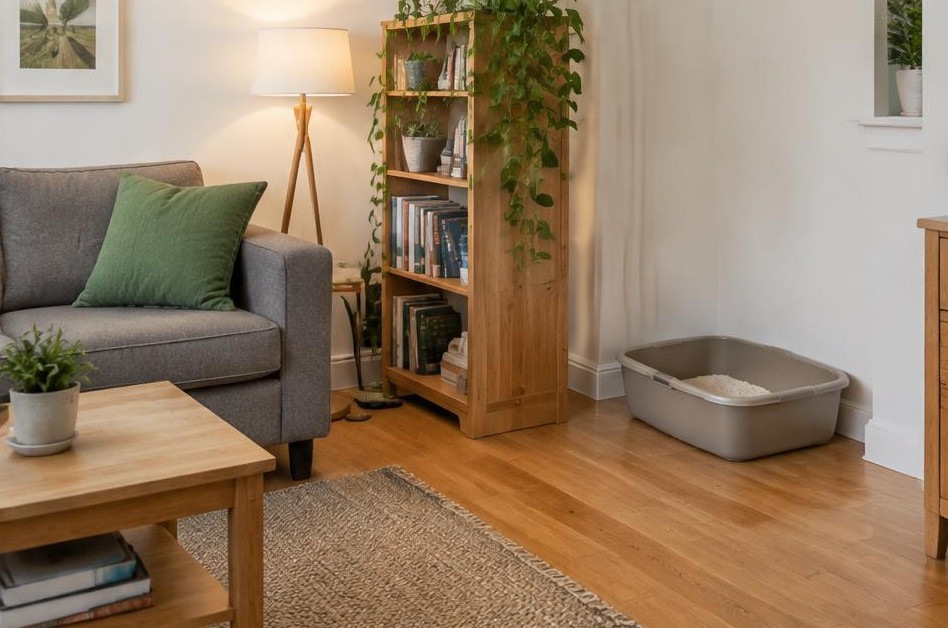
Small-Space Cat Care
Where to Put a Litter Box in a Small Apartment: An Access-First Checklist
Compare bathroom, bedroom and living-area corners by quiet access, cleaning room and escape routes—not how well a cabinet hides the tray.
5 min read
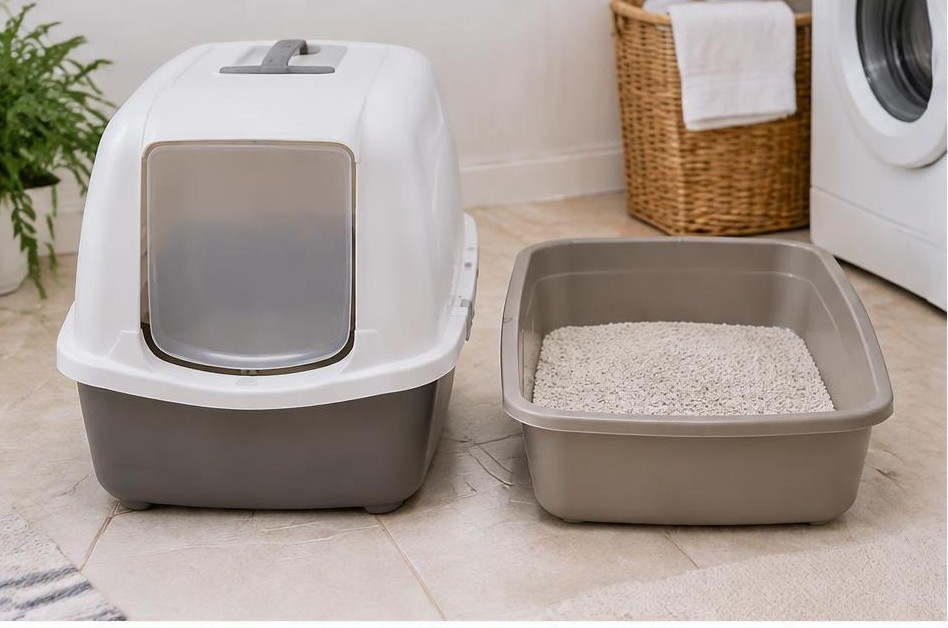
Litter Box Comparison
Covered vs Uncovered Litter Box: Test Your Cat’s Preference Before Buying
Compare usable space, exits and daily inspection without assuming that a hood gives every cat the privacy they want.
5 min read