
Garden Water
How Deep Should a Bird Bath Be? Choose Shallow Water and Secure Footing
Use Cornell’s shallow-water guidance to compare basins, gentle slopes, stable stones and a realistic cleaning routine.
By Pussies & Tits · 5 min read · Published
Sourcing and editorial standardsThe short answer
Cornell recommends a shallow bath, about one to two inches deep, with a gentle slope. Birds need secure footing and a way to approach shallower water. Check actual water depth rather than the basin’s total height, and keep the bath clean and separated from cat ambush routes.
See your next step →Key takeaways
- A deep decorative bowl is not automatically suitable for bathing birds.
- Depth, slope and surface grip work together.
- Moving water does not replace cleaning or prevent every health risk.
Measure water depth, not the ornament
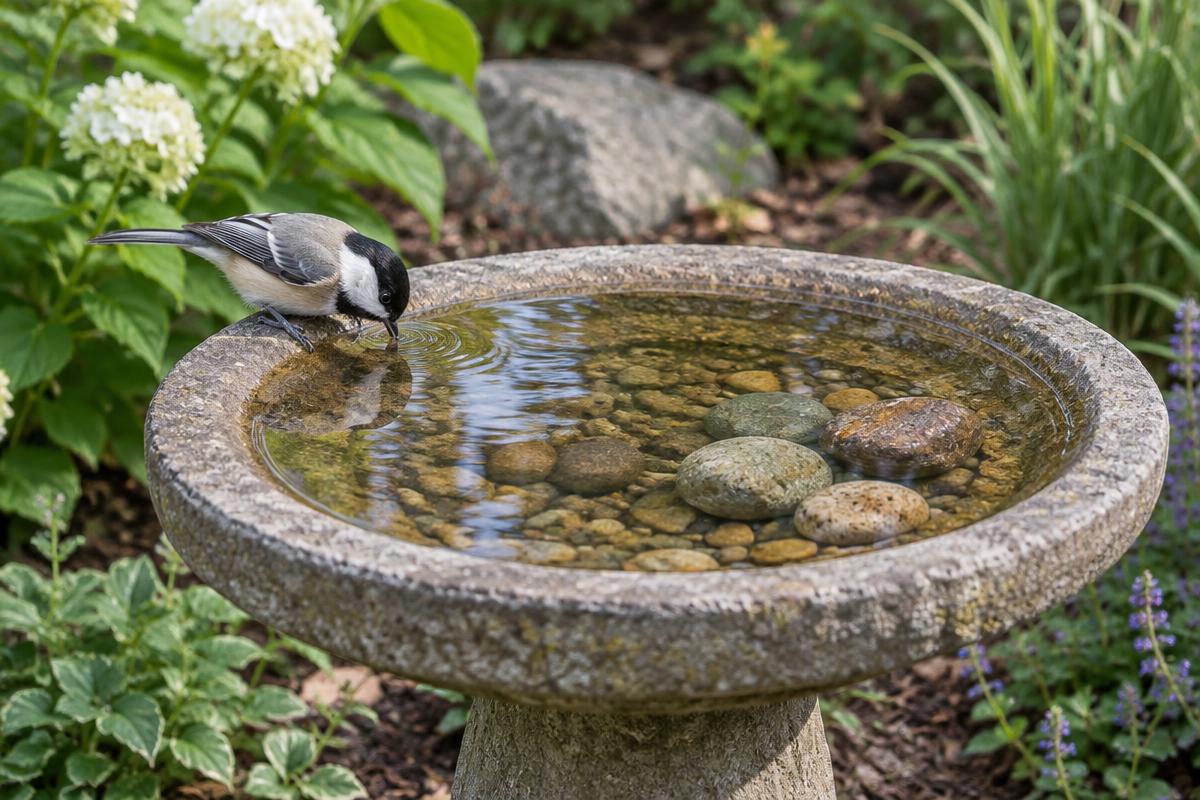
Cornell’s bird-attraction guidance describes baths only an inch or two deep with a shallow slope. This is a practical starting point, not a claim that every bird needs exactly the same depth. A tall pedestal tells you nothing about how deep the water is. Measure the filled basin and inspect the shallow edge where small birds can stand. A large decorative bowl may look impressive while offering little easy entry.
Compare slope, grip and access
Cornell recommends baths that mimic shallow natural pools and notes that glazed surfaces may be slippery and some traditional concrete designs are hard to clean. Choose a stable surface with a gentle transition into the water. Secure stones can provide shallower standing areas, but they should not roll or create a crowded obstacle course. A simple shallow pan can be a workable alternative if it remains stable, clean and safely positioned.
| Feature | Good starting point | Check carefully |
|---|---|---|
| Water depth | About one to two inches | Actual filled depth |
| Approach | Gentle shallow slope | Steep smooth walls |
| Footing | Stable textured surface | Loose stones or slippery glaze |
| Maintenance | Easy emptying and scrubbing | Heavy or inaccessible basin |
Choose a shallow basin you can lift and clean
Compare actual water depth, slope and removable-basin details rather than decorative height.
Compare on Amazon →Affiliate link: we may earn from qualifying purchases at no extra cost to you.
Choose the site with cats in mind
Bathing birds are vulnerable to predators. Cornell advises keeping cats indoors and maintaining open separation from thick nearby shrubbery where cats may hide. Look for fences and furniture that create approach routes. Shade can help during hot months, but avoid trading temperature comfort for concealed stalking cover. There is no universal pedestal height that makes every site safe. If birds remain within reach, change the layout or provide water elsewhere.
Keep the water clean, not just moving
A pump, dripper or wiggler may change how the water looks, but none removes droppings or replaces washing. Refresh water and inspect the basin frequently; clean using current wildlife guidance and appropriate product instructions. Audubon’s disease guidance covers baths as well as feeders. Work away from food-preparation areas, never mix cleaning chemicals, rinse well and keep equipment dedicated to the task. Follow local advice if sick birds appear rather than assuming clear water is harmless.
Buy for maintenance and climate
Before ordering, check bowl depth, empty weight, finish and how the basin is removed from its support. Cornell notes that concrete can crack in freezing temperatures, so read the manufacturer’s cold-weather instructions for the exact material. This article does not test heaters, pumps or frost claims. A manageable shallow basin may be a better first purchase than a heavy fountain. If you already own a suitable pan, try that before paying for extra features.
Frequently asked questions
Can I make a deep bird bath shallower with stones?
Stable stones can create shallow standing places, but they must not roll or obstruct access. A naturally shallow basin is easier to evaluate.
Does a solar fountain keep a bird bath clean?
No. Moving water still needs inspection, refreshing and regular cleaning.
Sources and further reading
This guide summarizes the references below. It is not a veterinary consultation or an independently tested product review. Check current local wildlife advice before acting.
Choose a shallow basin you can lift and clean
Compare actual water depth, slope and removable-basin details rather than decorative height.
Compare on Amazon →Affiliate link: we may earn from qualifying purchases at no extra cost to you.
Keep exploring
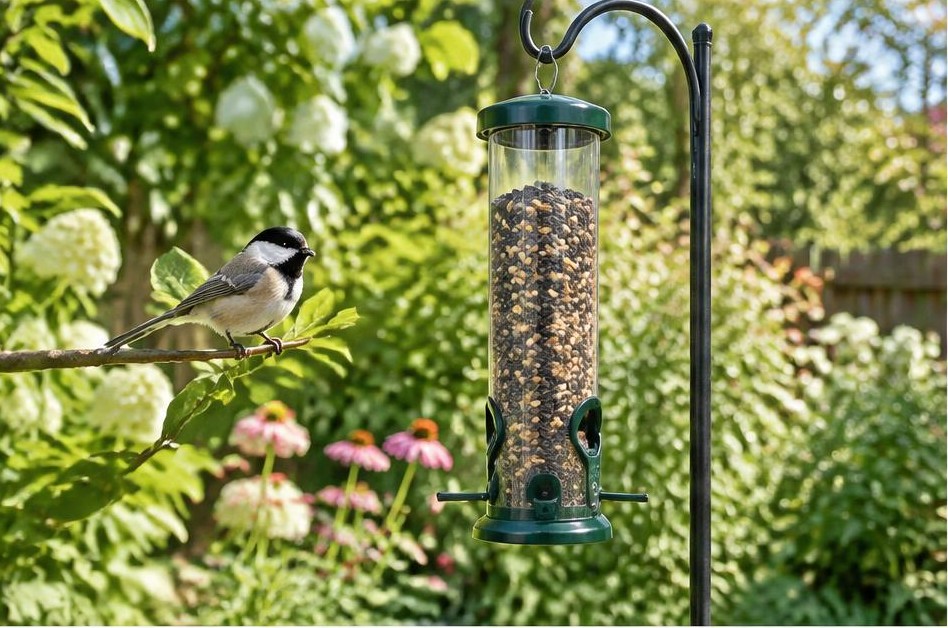
North American Bird Feeding
How to Attract Birds to a New Feeder: Check Food, Habitat and Safety First
A North American troubleshooting plan for a quiet feeder, without promising a deadline or recommending food piles on the ground.
5 min read
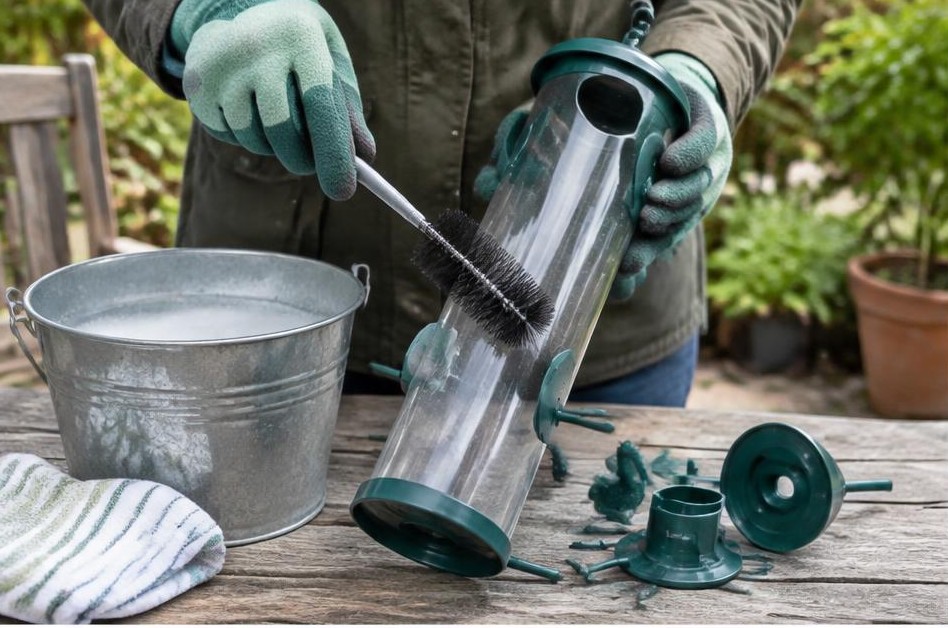
Feeder Hygiene
How to Clean Bird Feeders: A Trichomonosis-Aware Hygiene Checklist
Separate routine cleaning from illness response, prevent cross-contamination and choose equipment you can actually disassemble.
6 min read