North American Bird Feeding
How to Attract Birds to a New Feeder: Check Food, Habitat and Safety First
A North American troubleshooting plan for a quiet feeder, without promising a deadline or recommending food piles on the ground.
By Pussies & Tits · 5 min read · Published
Sourcing and editorial standardsThe short answer
Offer fresh food suited to local species in a visible, safe, clean feeder, with nearby habitat and clean water where you can maintain them. Give birds time to find it and change one factor at a time. No feeder or seed guarantees visits within a set number of days.
See your next step →Key takeaways
- Match food and feeder openings to birds actually present locally.
- Native habitat, safe glass and cat separation matter more than adding capacity.
- Remove wet or spoiled food instead of continually topping up.
Check whether the feeder matches the neighborhood
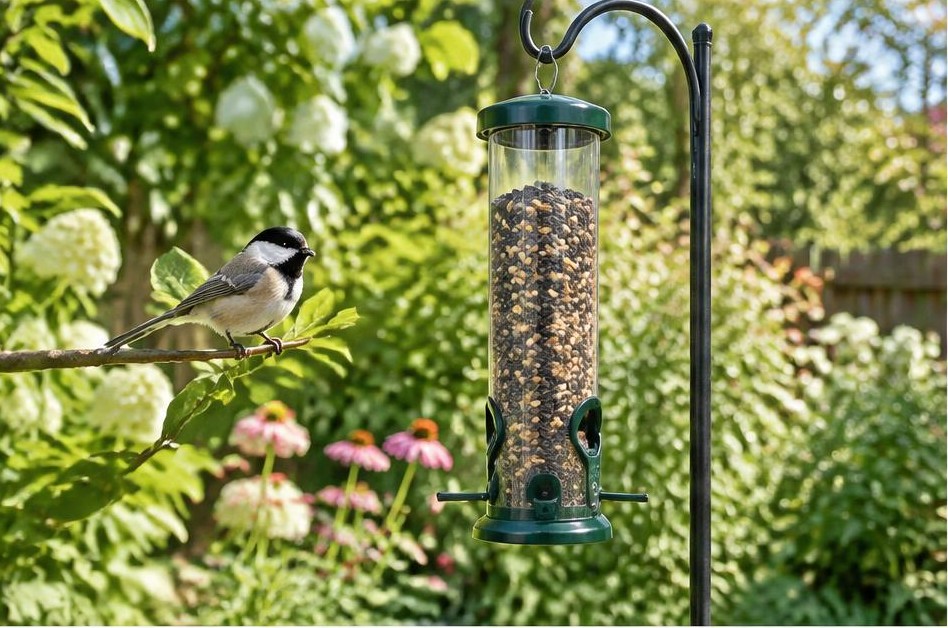
This guide uses North American feeding references and chickadees and titmice as examples. European blue tits need local species and seasonal guidance instead. Audubon describes food, water and shelter as complementary parts of a bird-friendly yard. A feeder cannot create a local bird population, and natural food availability affects visits. Observe nearby birds or consult a regional field guide before assuming an empty feeder needs a different brand.
Match one food to one workable feeder
Audubon identifies black-oil sunflower seed as appealing to many species and recommends appropriate foods in separate feeders to reduce waste. Start with a modest amount rather than a large mixed buffet. Make sure the openings dispense the chosen food without clogging and that rain can drain. Do not use salted snack foods or try to compensate for poor access by scattering large piles beneath the feeder.
| What you see | Check first | Useful adjustment |
|---|---|---|
| Birds nearby, no visits | Food and access | Try suitable fresh seed |
| Wet clumps | Drainage and weather exposure | Empty, clean and dry |
| Visits followed by escape | Pets, traffic and glass | Reassess the site |
| Mostly dropped food | Blend and feeder compatibility | Reduce waste and portions |
Choose a feeder you can fill and clean well
Compare removable bases, drainage and seed compatibility. Start with a manageable quantity of food.
Compare on Amazon →Affiliate link: we may earn from qualifying purchases at no extra cost to you.
Treat safety as part of attraction
A garden that attracts birds must also protect them from predictable hazards. Keep domestic cats indoors, assess ambush routes from neighboring cats and treat dangerous window reflections. Our placement guide explains why distance alone is not a guarantee against collisions. Native plants can provide natural food and shelter, but dense low cover beside the feeder may hide a cat. If you cannot make a site suitable, watching birds in another location is preferable to drawing them into danger.
Use a simple observation log
Note the date, weather, food condition, species seen nearby and visits. Keep the position stable long enough to observe patterns rather than moving it several times a day. When changing something, alter only food, position or design so the result is interpretable. An empty feeder is not proof of failure after one quiet afternoon. Check from a distance and avoid repeatedly standing beside it to see whether birds arrive.
Maintain it even before the first regular visitor
Food can become damp or contaminated without obvious crowds. Audubon recommends regular cleaning and an appropriate disease response if sick birds appear. Disassemble, clean, rinse and dry using current guidance and product instructions. Follow local wildlife advisories, especially where bears or disease make feeding inappropriate. Buy another feeder only if the existing design cannot dispense appropriate food or be maintained safely; capacity alone is rarely the first missing piece.
Frequently asked questions
How long until birds discover a new feeder?
There is no guaranteed deadline. Local birds, habitat, season, food and disturbance all influence discovery and use.
Should I spread seed on the ground to advertise it?
Avoid large piles, especially near cats or where pests are a concern. Focus on appropriate clean food in a safe feeder and follow local advice.
Sources and further reading
This guide summarizes the references below. It is not a veterinary consultation or an independently tested product review. Check current local wildlife advice before acting.
Choose a feeder you can fill and clean well
Compare removable bases, drainage and seed compatibility. Start with a manageable quantity of food.
Compare on Amazon →Affiliate link: we may earn from qualifying purchases at no extra cost to you.
Keep exploring
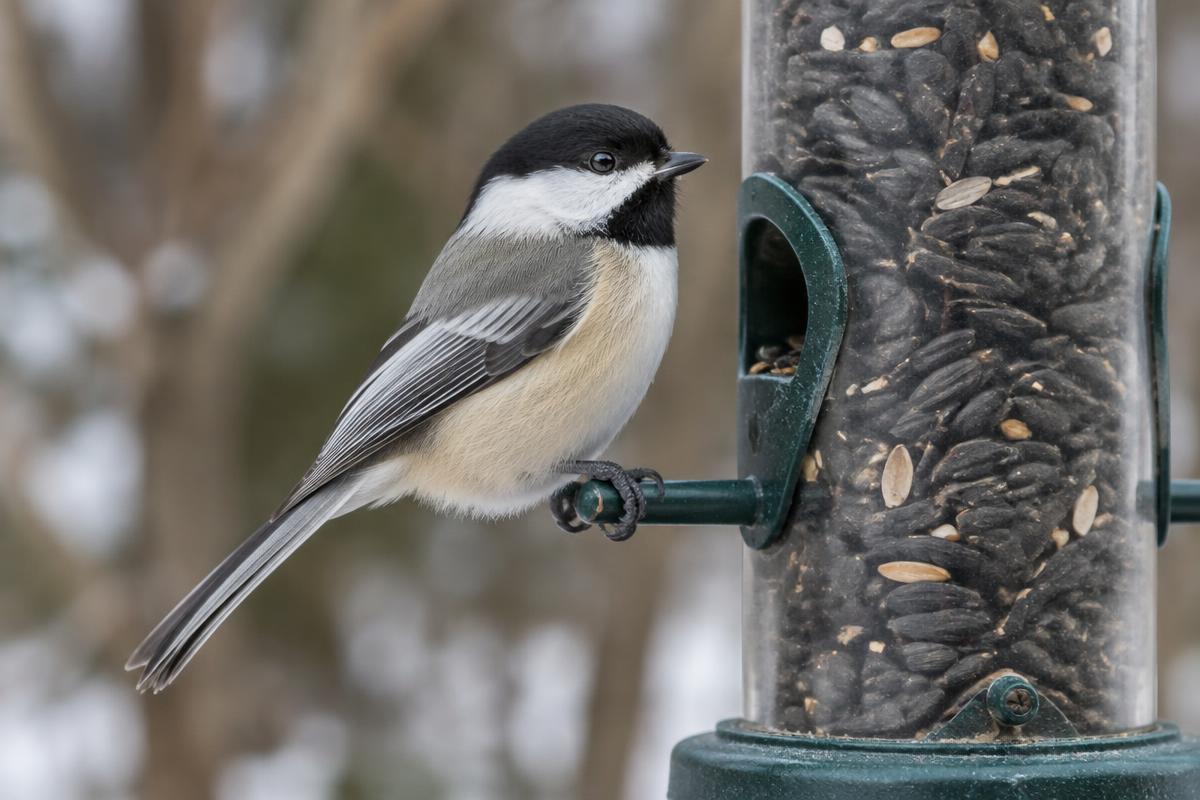
Chickadees & Titmice
Best Bird Seed for Chickadees and Titmice: A Simple North American Starting Point
Choose suitable sunflower seed and a manageable feeder, then compare shell waste, storage and local wildlife guidance before buying bulk.
5 min read
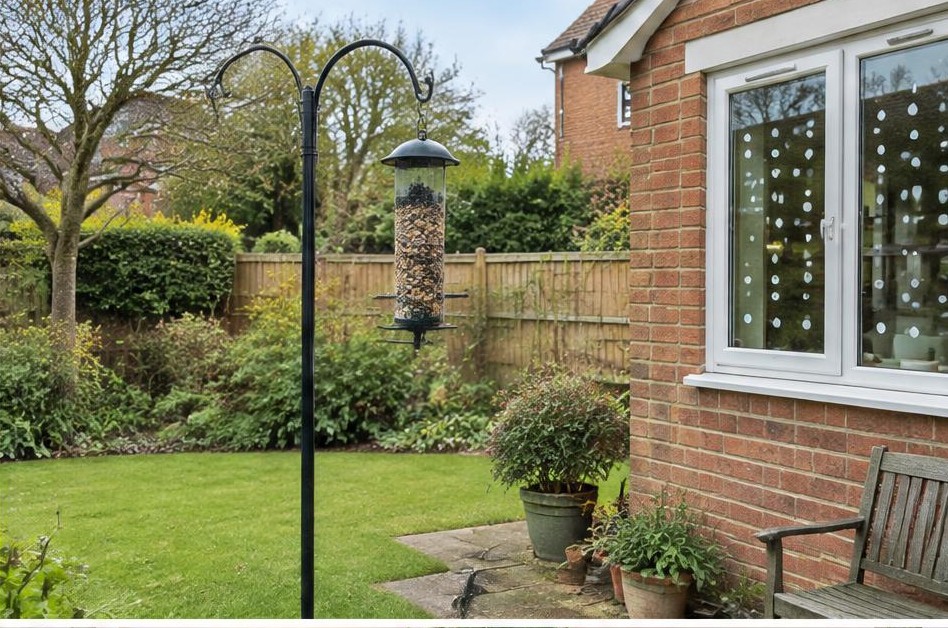
Safer Feeder Placement
Bird Feeder Placement Near Cats and Windows: A Small-Garden Checklist
Assess ambush cover, cat access, hazardous glass and maintenance together rather than treating one distance as a guarantee of safety.
6 min read